
HGH and IGF-1: How They Work Together
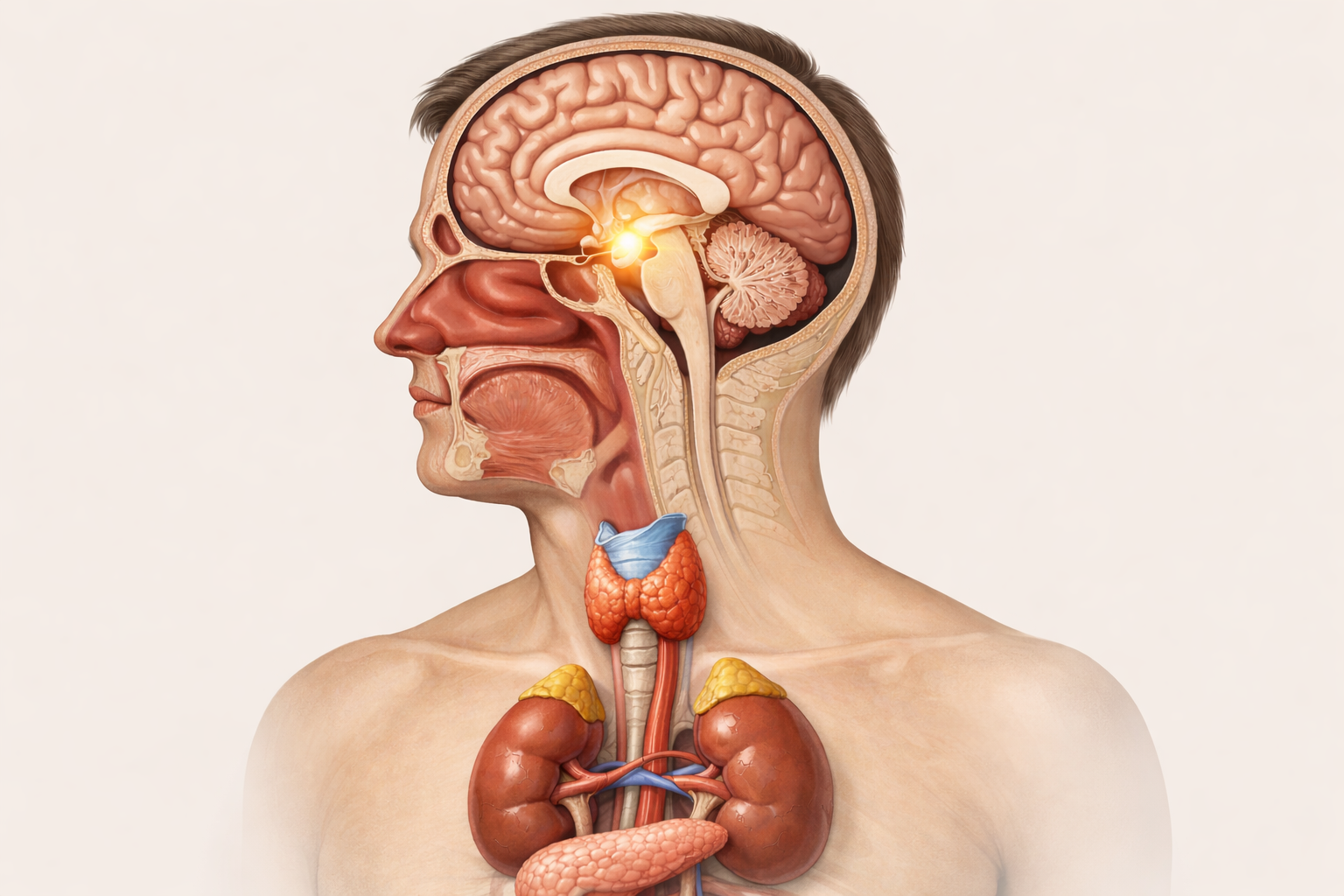
HGH (human growth hormone) and IGF-1 (insulin-like growth factor 1) are closely connected hormones that play a key role in growth, recovery, and muscle development. HGH does not work alone — most of its effects are carried out through IGF-1, which acts as its primary mediator in the body.
This means that when people compare HGH vs IGF-1, they are not looking at two completely separate systems, but at two parts of the same biological pathway.
Understanding how HGH and IGF-1 work together is essential for both medical and bodybuilding contexts.
What Is HGH and What Does It Do?
Human growth hormone is produced by the pituitary gland and is responsible for regulating growth, metabolism, and tissue repair. It is released in pulses, especially during deep sleep and intense physical activity.
HGH influences:
- protein synthesis
- fat metabolism
- recovery processes
- overall physical development
However, HGH does not directly build muscle in the way many people assume. Instead, it signals the body to produce IGF-1, which then carries out many of the growth-related effects. HGH is a signal, not the final action.
What Is IGF-1 and Why Is It Important?
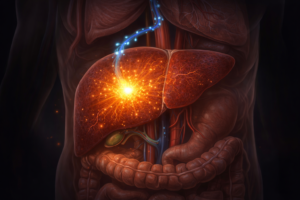
IGF-1 is a hormone produced mainly in the liver in response to HGH. It plays a direct role in cell growth, tissue repair, and muscle development.
Unlike HGH, IGF-1 acts locally in tissues, including muscle cells, where it stimulates:
- cell proliferation
- muscle fiber growth
- tissue regeneration
HGH and IGF-1: How They Work Together
The relationship between HGH and IGF-1 is one of the most important concepts to understand.
The process works like this:
- HGH is released by the pituitary gland
- HGH signals the liver to produce IGF-1
- IGF-1 travels through the bloodstream
- IGF-1 stimulates growth in tissues
This chain reaction explains why increasing HGH does not always guarantee increased muscle growth. If IGF-1 response is limited, the overall effect will also be limited. The system depends on both hormones.
IGF-1 vs HGH for Bodybuilding
In bodybuilding, the comparison between IGF-1 vs HGH is often misunderstood. Many assume that HGH alone is responsible for muscle growth, but in reality, IGF-1 plays a more direct role in hypertrophy.
HGH contributes by:
- improving recovery
- increasing fat loss
- supporting joint health
IGF-1 contributes by:
- directly stimulating muscle growth
- increasing cell division
- enhancing tissue repair
Because of this, IGF-1 is often considered more “anabolic” in terms of muscle-building effects. Different roles create different outcomes.
HGH and IGF-1 Together for Bodybuilding
Using HGH and IGF-1 together is sometimes discussed in bodybuilding because of their complementary roles.
HGH increases the production of IGF-1, while IGF-1 directly affects muscle tissue. This creates a synergistic effect where both hormones contribute to growth and recovery.
The combined effects may include:
- improved muscle recovery
- enhanced lean mass development
- better overall body composition
However, it is important to understand that this interaction already happens naturally in the body. External manipulation of this system introduces complexity and potential risks.
The body already uses this pathway.
Why HGH Alone Does Not Guarantee Muscle Growth
A common misconception is that increasing HGH automatically leads to significant muscle growth.
In reality, HGH primarily affects:
- fat metabolism
- recovery speed
- tissue repair
Muscle growth depends heavily on IGF-1 and other factors such as training, nutrition, and genetics.
This is why some people see limited muscle gains from HGH alone. Without sufficient IGF-1 activity and proper training stimulus, the expected results may not occur.
Growth depends on multiple factors.
What Science Says About HGH and IGF-1
Research shows that HGH and IGF-1 are part of a complex hormonal system that regulates growth and aging.
Insights from IGF-1 and HGH analysis from DaVinci Labs highlight that optimal levels of both hormones are important for maintaining muscle mass, metabolic health, and recovery. However, balance is critical. Both low and excessively high levels can have negative effects. This reinforces the idea that more is not always better when it comes to hormonal manipulation. Hormonal balance matters.
Risks and Side Effects of HGH and IGF-1
Although HGH and IGF-1 are natural hormones, their external use or imbalance can lead to significant side effects. This is especially relevant in bodybuilding, where higher-than-normal levels are often targeted.
HGH-related side effects are usually linked to metabolic and tissue changes. These may include fluid retention, joint discomfort, and insulin resistance. In more extreme cases, excessive HGH can lead to abnormal tissue growth.
IGF-1, due to its direct role in cell proliferation, carries a different type of risk. Elevated levels may increase uncontrolled cell growth, which is why IGF-1 is closely monitored in medical contexts.
The key issue is not just the presence of these hormones, but their balance. When HGH and IGF-1 levels exceed physiological ranges, the risks increase significantly.
More is not always better.
HGH vs IGF-1 vs Combination: Practical Comparison
To better understand how HGH, IGF-1, and their combination differ, it helps to look at their effects side by side in a practical context.
| Factor | HGH | IGF-1 | HGH + IGF-1 |
| Muscle growth | Indirect | Direct | Stronger combined effect |
| Fat loss | High | Low | Moderate |
| Recovery | Strong | Strong | Enhanced |
| Risk level | Moderate | Higher | Highest |
| Complexity | Low | Medium | High |
This comparison highlights an important point: combining HGH and IGF-1 increases both potential benefits and risks. The interaction between these hormones amplifies effects, but also makes outcomes less predictable.
HGH and IGF-1 in Bodybuilding: Real Expectations
In bodybuilding, HGH and IGF-1 are often associated with advanced physique development, but expectations are frequently unrealistic.
HGH alone is more commonly linked to:
- improved recovery between workouts
- better joint support
- reduced body fat
IGF-1, on the other hand, is associated with:
- increased muscle density
- enhanced cellular growth
- faster tissue repair
However, neither hormone replaces the fundamentals of muscle growth, which include training intensity, nutrition, and recovery. Hormones amplify signals, they do not replace effort.
Why the Combination Is Popular
The idea of using HGH and IGF-1 together comes from their natural biological relationship. Since HGH stimulates IGF-1 production, combining them is seen as a way to enhance the overall growth pathway.
This combination is often discussed in advanced bodybuilding because it may:
- accelerate recovery cycles
- improve nutrient utilization
- enhance overall anabolic environment
However, it is important to understand that this approach increases complexity. Managing two interacting hormones requires careful control, and the margin for error becomes smaller.
Common Misconceptions About HGH and IGF-1
There are several widespread misunderstandings about how HGH and IGF-1 work.
One common belief is that HGH directly builds muscle in the same way anabolic steroids do. In reality, HGH mainly supports the environment for growth rather than directly causing hypertrophy.
Another misconception is that IGF-1 and HGH are interchangeable. While they are connected, their roles are different, and replacing one with the other does not produce the same outcome.
Some also assume that combining HGH and IGF-1 guarantees better results. In practice, results vary widely and depend on many factors beyond hormone levels. Misunderstanding the system leads to poor decisions.
Which Is Better: IGF-1 or HGH?
The question of whether IGF-1 or HGH is better does not have a universal answer because it depends on the goal.
If the goal is:
- recovery and fat loss → HGH plays a stronger role
- direct muscle growth → IGF-1 has more impact
- balanced development → both hormones contribute
Natural Optimization of HGH and IGF-1
Before considering any external approach, it is important to understand that both HGH and IGF-1 can be influenced naturally.
Key factors that support optimal levels include:
- sleep quality, especially deep sleep cycles
- resistance training and high-intensity exercise
- proper nutrition, including protein intake
- overall metabolic health
Final Answer: HGH and IGF-1 Explained
HGH and IGF-1 are part of the same biological system, but they perform different roles. HGH acts as the signal that initiates growth processes, while IGF-1 carries out the actual effects at the tissue level.
In bodybuilding and performance contexts, IGF-1 has a more direct impact on muscle growth, while HGH supports recovery, fat loss, and overall development. Using them together can amplify results, but also increases complexity and risk.
The most important factor is not choosing one over the other, but understanding how they interact and what role each plays in the body. Balance determines outcome.
FAQ: HGH and IGF-1
What is the difference between HGH and IGF-1?
HGH is a hormone that signals growth processes, while IGF-1 is the hormone that directly stimulates tissue growth and repair.
Is IGF-1 stronger than HGH for muscle growth?
IGF-1 has a more direct effect on muscle growth, while HGH plays a supportive role.
Can HGH increase IGF-1 levels?
Yes, HGH stimulates the liver to produce IGF-1, which then carries out growth-related functions.
Is it better to use HGH and IGF-1 together?
They work together naturally in the body, but combining them externally increases both potential effects and risks.
Do HGH and IGF-1 replace training and nutrition?
No, they only support the processes triggered by proper training and diet.