
HGH For Injury Recovery
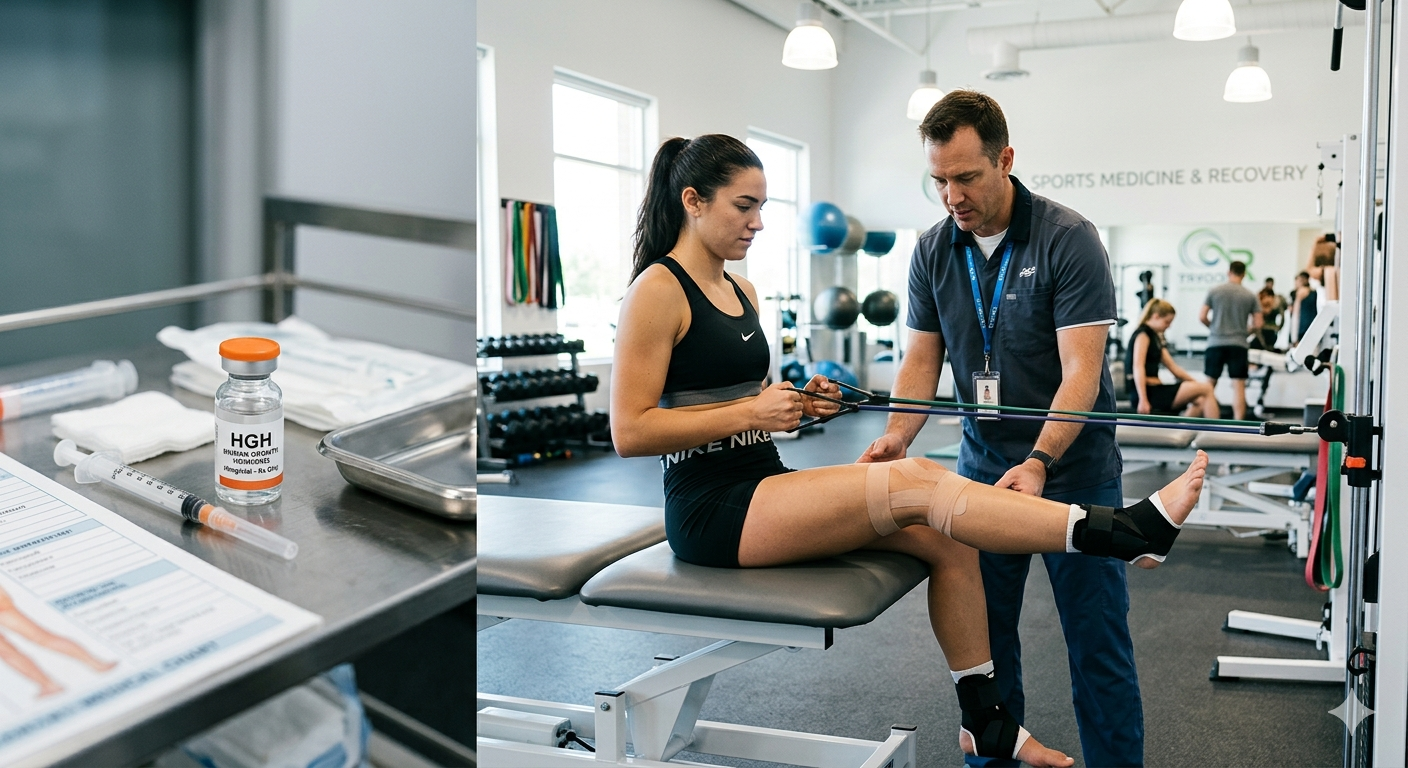
Human growth hormone is often discussed in connection with recovery, rehabilitation, and tissue repair after physical injuries. Athletes, bodybuilders, and individuals recovering from muscle, tendon, or joint damage sometimes explore HGH because of its potential role in regeneration and healing processes. Since HGH is linked with tissue growth, recovery pathways, and IGF-1 activity, many people believe it may support faster recovery after certain injuries. However, HGH use for injury recovery remains a complex topic that requires medical supervision and realistic expectations.
What Is HGH
Human growth hormone, commonly called HGH, is a peptide hormone naturally produced by the pituitary gland. It plays an important role in growth, metabolism, tissue repair, recovery, and body composition. During childhood and adolescence, HGH supports physical development, while in adults it continues helping regulate muscle maintenance, cellular repair, and metabolic activity.
One of the most important functions of HGH involves its interaction with IGF-1, or insulin-like growth factor 1. HGH stimulates IGF-1 production, which is connected with tissue regeneration and repair pathways throughout the body. Because of this relationship, HGH is often associated with recovery processes involving muscles, connective tissues, and joints.
Synthetic HGH products are designed to replicate the biological activity of naturally produced growth hormone. In medical settings, HGH may be prescribed for specific hormone deficiencies or recovery-related conditions under professional supervision. Outside medicine, HGH is commonly discussed in sports recovery and rehabilitation contexts because of its perceived connection with tissue healing.
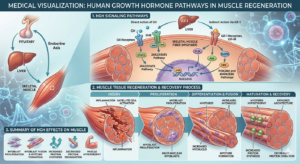
Although HGH is associated with recovery processes, healing outcomes still depend on multiple factors including nutrition, sleep quality, rehabilitation protocols, circulation, injury severity, and overall health status.
Natural HGH Production
Natural HGH production occurs in pulses throughout the day, with the largest releases commonly happening during deep sleep. Exercise, stress, fasting, and physical recovery demands may also influence HGH secretion patterns.
As people age, natural growth hormone production gradually declines. This reduction is one reason HGH becomes a topic in discussions related to recovery, performance, and anti-aging therapies. However, hormone levels vary significantly between individuals and should be evaluated medically rather than assumed based on symptoms alone.

HGH And Tissue Repair
HGH is closely connected with tissue repair because growth hormone and IGF-1 pathways influence cellular regeneration and recovery processes throughout the body. Muscles, tendons, connective tissues, and joints all rely on repair mechanisms that involve protein synthesis and tissue maintenance.
Because of this connection, HGH is often associated with injury recovery discussions in both sports medicine and rehabilitation settings. However, HGH is not considered a guaranteed solution for healing, and recovery outcomes depend heavily on rehabilitation quality, rest, nutrition, and proper medical treatment.
How HGH May Help With Injury Recovery
HGH may help with injury recovery because of its connection with tissue regeneration, protein synthesis, and recovery-related biological pathways. Growth hormone and IGF-1 activity are involved in processes that support muscle maintenance, connective tissue repair, and cellular recovery throughout the body. This is one reason HGH is frequently discussed in rehabilitation and sports recovery environments.
One of the main areas of interest is tissue repair support. After physical injury, the body activates complex healing responses involving inflammation control, protein rebuilding, circulation, and cellular regeneration. HGH is believed to interact with some of these pathways, particularly those involving muscle tissue and connective structures.
Recovery-related interest in HGH also comes from its possible role in reducing downtime between rehabilitation sessions. Athletes and physically active individuals may believe HGH helps support faster adaptation during recovery programs. However, recovery speed can vary greatly depending on injury severity, rehabilitation quality, sleep, nutrition, and overall health.
Another important point is that HGH does not directly replace rehabilitation or medical treatment. Proper physical therapy, controlled movement, rest, and injury management remain essential parts of recovery. HGH-related effects are often discussed as supportive rather than as stand-alone healing solutions.
| Recovery Area | Possible HGH Connection |
|---|---|
| Muscle repair | Protein synthesis support |
| Connective tissue recovery | IGF-1 activity |
| Rehabilitation support | Recovery-related pathways |
| Tissue maintenance | Cellular regeneration processes |
Although HGH receives significant attention in injury recovery discussions, scientific evidence regarding recovery enhancement remains mixed, and individual responses can differ considerably.
Muscle And Tendon Recovery
Muscle and tendon recovery are among the most commonly discussed areas related to HGH use in rehabilitation and sports medicine. Because growth hormone is connected with protein synthesis and tissue repair pathways, some people believe HGH may help support recovery after muscle strain, overtraining, or tendon-related injuries.
Tendons generally recover more slowly than muscles because connective tissues often receive less direct blood supply. This slower healing process is one reason athletes and physically active individuals sometimes explore HGH-related recovery protocols. Growth hormone and IGF-1 activity are believed to influence cellular repair and connective tissue maintenance, which may play a role during rehabilitation.
However, recovery still depends heavily on physical therapy, controlled rehabilitation, rest, nutrition, and injury severity. HGH alone cannot fully compensate for poor recovery habits or inadequate treatment programs.
Joint And Ligament Healing
Joint and ligament healing is another area where HGH is frequently discussed. Ligaments and joint-support structures recover gradually because connective tissue regeneration can take significant time after injury or strain.
Some rehabilitation discussions suggest HGH may support recovery-related pathways connected with connective tissue maintenance and collagen activity. Since joints and ligaments rely heavily on structural proteins and tissue integrity, growth hormone pathways may theoretically contribute to healing support.
At the same time, recovery outcomes vary significantly between individuals, and no hormone-based approach guarantees complete or accelerated healing. Proper rehabilitation programs, mobility work, inflammation management, and medical supervision remain essential parts of joint and ligament recovery.
HGH Dosage For Injury Recovery
HGH dosage for injury recovery can vary significantly depending on the individual, medical condition, treatment goals, and professional supervision involved. Because HGH directly affects hormone balance, metabolism, tissue repair, and recovery pathways, dosage decisions should never rely solely on online advice or bodybuilding discussions.
In medical settings, HGH protocols are usually individualized according to hormone levels, injury type, overall health, age, and response to treatment. Some recovery-focused protocols may involve lower or moderate HGH exposure intended to support rehabilitation while minimizing the risk of excessive side effects.
One reason dosage management is important is that higher HGH exposure does not automatically guarantee faster healing. Excessive dosing may increase the chance of fluid retention, joint discomfort, swelling, insulin sensitivity issues, or other hormone-related complications. Recovery quality also depends heavily on rehabilitation, nutrition, sleep, and medical care rather than hormone use alone.
Several factors may influence HGH recovery protocols:
- injury severity and rehabilitation goals;
- age and natural hormone levels;
- overall metabolic and cardiovascular health;
- medical supervision and monitoring frequency.
| Recovery Factor | Why It Matters |
|---|---|
| Injury severity | May affect recovery timeline |
| Hormone monitoring | Helps reduce side-effect risks |
| Rehabilitation quality | Essential for long-term recovery |
| Metabolic health | Influences HGH response |
Another important issue is product quality and source reliability. Counterfeit or unregulated HGH products may contain incorrect ingredients or inconsistent hormone concentrations, increasing the risk of complications and reducing treatment reliability.
Because of these concerns, HGH recovery protocols should always involve professional medical oversight rather than unsupervised experimentation.
Medical Supervision And Monitoring
Medical supervision is extremely important during HGH recovery protocols because growth hormone directly affects multiple systems throughout the body. Healthcare providers may monitor hormone levels, blood sugar markers, cardiovascular health, and recovery response during treatment.
Regular monitoring helps reduce the risk of side effects and allows treatment adjustments if problems develop. It also helps ensure HGH is being used appropriately within a broader rehabilitation plan rather than as an isolated recovery shortcut.

Benefits Of HGH Recovery Protocols
One reason HGH recovery protocols receive attention is the belief that growth hormone may support tissue repair and rehabilitation-related processes during injury recovery. Since HGH and IGF-1 activity are involved in protein synthesis and connective tissue maintenance, some people associate HGH protocols with recovery support following intense physical stress or injury.
One commonly discussed benefit is support for rehabilitation consistency. Athletes recovering from injuries may believe HGH helps maintain training capacity or reduces recovery downtime between rehabilitation sessions. Recovery-focused protocols are often discussed in relation to muscle strain recovery, tendon rehabilitation, and connective tissue support.
Another possible advantage involves tissue maintenance during periods of reduced activity. After injury, people sometimes experience muscle loss or reduced physical conditioning due to limited movement. HGH-related recovery strategies are occasionally associated with preserving lean tissue during rehabilitation periods.
Potential benefits often associated with HGH recovery protocols include:
- support for tissue repair pathways;
- recovery-related metabolic activity;
- rehabilitation support during reduced activity;
- connective tissue maintenance.
However, it is important to separate supportive recovery concepts from unrealistic expectations. HGH is not considered a guaranteed cure for injuries, and recovery still depends heavily on rehabilitation quality, medical treatment, nutrition, sleep, and overall health management.
Risks And Side Effects Of HGH
Although HGH is often discussed in relation to recovery and rehabilitation, its use may also involve several risks and side effects. Because human growth hormone directly affects metabolism, fluid balance, tissue growth, and hormone regulation, improper use or excessive exposure can create health complications even when the goal is injury recovery.
One of the most commonly reported side effects is fluid retention. Some individuals may experience swelling in the hands, feet, or joints due to changes in water balance. Joint discomfort, stiffness, muscle pain, numbness, and tingling sensations are also frequently associated with HGH misuse or poorly controlled dosing.
Metabolic complications are another important concern. HGH may influence blood sugar regulation and insulin sensitivity, potentially increasing the risk of glucose-related issues over time. Individuals with preexisting metabolic or cardiovascular conditions may face greater risks during unsupervised HGH use.
Injection-related problems may also occur. Poor sterile technique, repeated injections into the same location, or contaminated products may increase the risk of irritation, swelling, bruising, or infection. Counterfeit HGH products obtained through unregulated sources create additional safety concerns because product quality and hormone concentration may be unreliable.
Possible side effects associated with HGH include:
- swelling and fluid retention;
- joint or muscle discomfort;
- changes in blood sugar regulation;
- irritation at injection sites;
- hormone-related imbalance.
Another issue is unrealistic recovery expectations. Some individuals may rely too heavily on HGH while neglecting proper rehabilitation, physical therapy, nutrition, or medical care. Since recovery depends on multiple biological and mechanical factors, HGH should never replace evidence-based rehabilitation practices.
Because of these risks, medical supervision and monitoring remain extremely important whenever HGH is considered within recovery-related treatment plans.
Alternatives To HGH For Recovery
Many people recovering from injuries explore alternatives to buy HGH online because they want lower-risk or non-hormonal recovery approaches. In many cases, proper rehabilitation strategies, physical therapy, and recovery-focused lifestyle habits may provide significant benefits without the risks associated with hormone use.
One of the most effective alternatives is structured rehabilitation guided by medical professionals or physical therapists. Controlled mobility work, strengthening exercises, and progressive recovery plans help restore function while reducing the risk of reinjury. Recovery quality often depends more on consistency and proper rehabilitation than on aggressive hormone-based strategies.

Nutrition also plays a major role in tissue repair and healing. Adequate protein intake, hydration, micronutrients, and overall metabolic health are essential for supporting muscle recovery, connective tissue maintenance, and rehabilitation progress. Sleep quality is equally important because many recovery-related hormones and repair pathways become more active during deep sleep.
Other recovery-focused approaches may include:
- physical therapy and mobility programs;
- recovery-oriented nutrition strategies;
- sleep optimization and stress management;
- medically supervised rehabilitation treatments.
Some individuals may also explore peptide-based therapies or non-HGH recovery protocols under professional supervision. However, these approaches should still be evaluated carefully because recovery needs vary depending on injury type, age, health status, and rehabilitation goals.
Ultimately, successful injury recovery usually depends on a combination of proper medical care, rehabilitation consistency, healthy lifestyle habits, and realistic expectations rather than relying entirely on HGH or any single recovery method.