
What Is Recombinant HGH? Definition, Use, and Key Differences
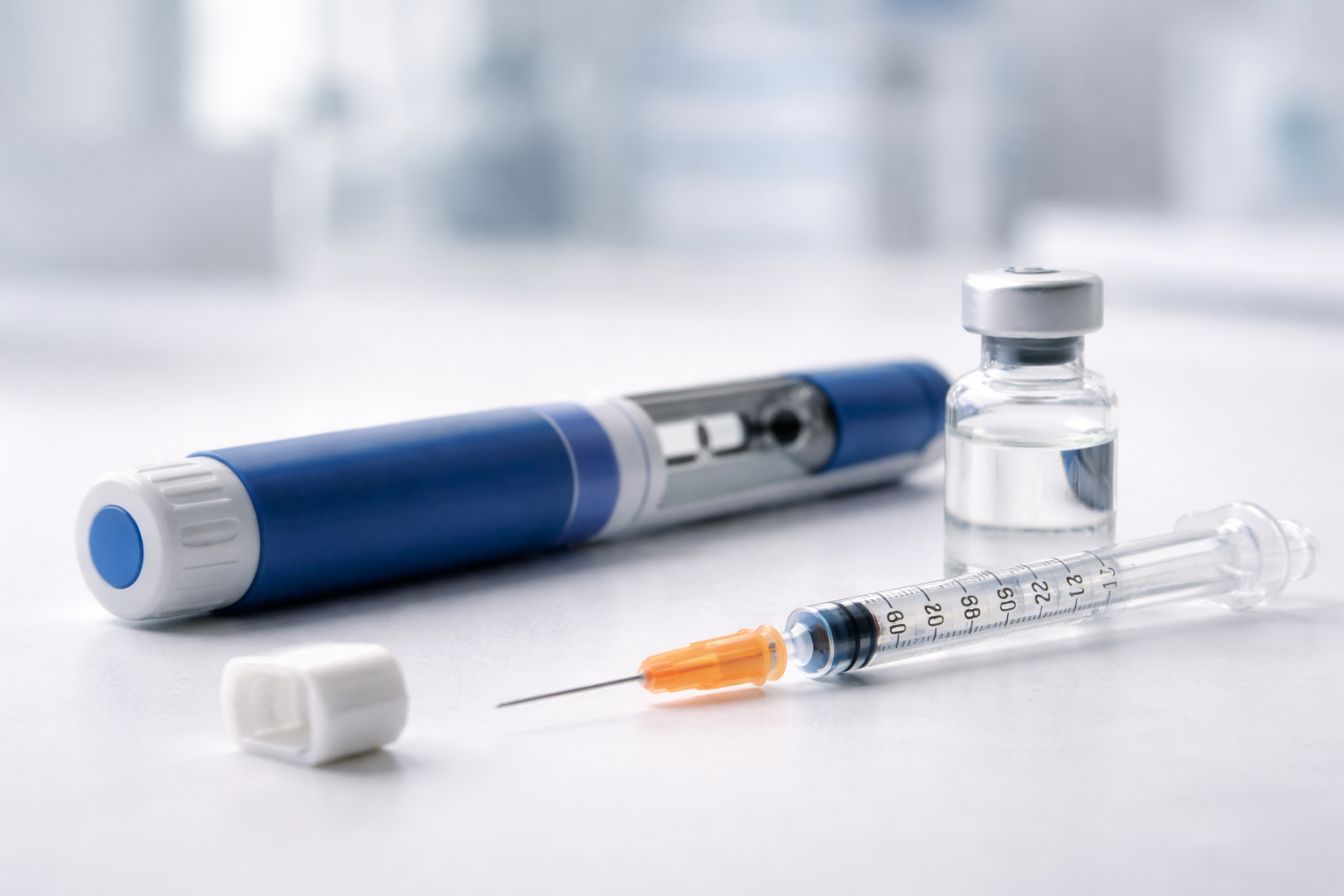
Recombinant human growth hormone (HGH) is a laboratory-produced version of the natural growth hormone created by the pituitary gland. It is developed using genetic engineering techniques that allow scientists to replicate the exact structure of endogenous HGH, making it biologically active and functionally identical.
This form of HGH is now the standard used in medicine because it provides consistent quality, controlled dosing, and eliminates the risks that were associated with older extraction methods. Rather than being sourced from human or animal tissue, recombinant HGH is produced in a controlled environment, which significantly improves both safety and availability.
What Is Recombinant Human Growth Hormone?
Recombinant human growth hormone, often abbreviated as rhGH, is created using recombinant DNA technology. In this process, the gene responsible for producing HGH is inserted into host cells, typically bacteria, which are then used to manufacture the hormone at scale.
The result is a highly purified compound that mirrors the natural hormone produced by the body. Because of this structural similarity, recombinant HGH binds to the same receptors and activates the same biological pathways as endogenous growth hormone.
This is why, from a physiological perspective, there is no functional difference between natural HGH and its recombinant version once it enters the bloodstream.
How Recombinant HGH Works in the Body
After injection, recombinant HGH circulates through the bloodstream and interacts with receptors in multiple tissues, including the liver, muscles, and bones. One of its primary roles is to stimulate the production of insulin-like growth factor 1 (IGF-1), which acts as the main mediator of growth-related processes in the body.
Through this mechanism, HGH indirectly drives many of the effects commonly associated with recovery and development. Increased IGF-1 levels contribute to several key physiological changes:
- enhanced protein synthesis, which supports muscle repair
- improved tissue regeneration after physical stress
- more efficient cellular turnover and recovery processes
These effects are interconnected and depend on how well the body responds to hormonal signaling rather than just the presence of HGH itself. This is why two individuals using the same hormone can experience very different outcomes depending on their biology, lifestyle, and overall health.
Recombinant Human Growth Hormone Injection
Recombinant HGH is administered through injection because its molecular structure cannot survive the digestive process. As a peptide hormone, it would be broken down in the stomach before reaching the bloodstream, which makes oral delivery ineffective.
Subcutaneous injection allows the hormone to enter circulation intact, ensuring predictable absorption and consistent biological activity. This method also enables precise control over dosage, which is critical in medical settings where hormone levels must be carefully regulated.
The delivery method is not just a preference but a requirement dictated by the biology of the hormone itself.

Recombinant HGH vs Natural HGH
The comparison between recombinant HGH and natural HGH often creates confusion, even though the difference is primarily in origin rather than function.
Natural HGH is produced internally by the pituitary gland, while recombinant HGH is manufactured in a laboratory. Despite this difference, both forms share the same amino acid sequence and interact with the body in the same way once present in the bloodstream.
From a clinical standpoint, recombinant HGH is simply a replacement for what the body either cannot produce in sufficient quantities or does not produce efficiently. Its purpose is not to introduce something foreign, but to restore a natural physiological process.
Why Recombinant HGH Replaced Older HGH Forms
Before recombinant technology was introduced, growth hormone was extracted from human cadaver pituitary glands. This approach presented significant limitations, including restricted supply and serious safety concerns.
One of the most critical risks was the potential transmission of diseases due to contamination, which ultimately led to the discontinuation of this method. The development of recombinant HGH solved these issues by enabling large-scale production in sterile, controlled environments.
This shift marked a major advancement in endocrinology, making growth hormone therapy both safer and more accessible for patients who need it.
Medical Uses of Recombinant HGH
Recombinant human growth hormone is used in medicine to treat a range of conditions related to growth and hormone deficiency. Its application is highly regulated and typically requires ongoing monitoring to ensure both safety and effectiveness.
In children, it is commonly prescribed for growth hormone deficiency and certain genetic conditions that affect normal development. In adults, it is used to address hormone deficiencies that can impact body composition, bone density, and overall metabolic function.
Because HGH influences multiple systems in the body, treatment is always tailored to the individual, with adjustments based on clinical response and hormone levels.
Recombinant HGH in Adults
In adult patients, recombinant HGH is not used to increase height but to restore hormonal balance and improve physiological function. Growth hormone deficiency in adults can lead to reduced muscle mass, increased fat accumulation, and decreased energy levels.
Therapy aims to correct these imbalances by supporting normal metabolic processes and improving the body’s ability to recover and maintain tissue integrity. However, the response to treatment can vary, and dosing must be carefully managed to avoid excessive hormone levels.
This highlights an important point: HGH therapy in adults is about optimization, not amplification.

Recombinant HGH in Performance Contexts
Outside of clinical use, recombinant HGH is often discussed in relation to performance and bodybuilding. In these contexts, it is associated with improved recovery, changes in body composition, and support for intensive training.
However, this type of use differs significantly from medical therapy. It is not approved in many regions, and it introduces additional risks due to higher or unsupervised dosing.
Understanding this distinction is essential, because the same substance can have very different implications depending on how and why it is used.
Recombinant Human Growth Hormone Side Effects
Although recombinant HGH is identical to the natural hormone, this does not mean it is risk-free. Side effects usually depend on dosage, duration of use, and individual sensitivity to hormone levels.
In medical settings, where dosing is controlled and monitored, side effects are typically manageable. However, when HGH is used outside clinical guidelines, the risk increases significantly.
The most commonly reported side effects include:
- fluid retention, which can lead to swelling in the hands and feet
- joint and muscle discomfort, особенно при higher doses
- increased insulin resistance, which may affect blood sugar levels
These effects are usually dose-dependent and often reversible when treatment is adjusted or discontinued. However, prolonged misuse can lead to more serious complications.
Long-Term Risks of Recombinant HGH
Long-term use of recombinant human growth hormone requires careful monitoring because excessive levels can disrupt normal physiological balance.
One of the main concerns is abnormal tissue growth. While HGH supports regeneration, excessive stimulation may lead to thickening of tissues rather than healthy development. This is particularly relevant in cases of chronic overuse.
Another important consideration is metabolic impact. Elevated HGH levels can interfere with glucose regulation, potentially increasing the risk of insulin resistance over time.
These risks highlight the importance of maintaining hormone levels within a physiological range rather than exceeding it.
Recombinant HGH vs Peptides and Boosters
Recombinant HGH is often compared with peptides and so-called “HGH boosters,” but these categories function very differently.
Recombinant HGH directly introduces the hormone into the body, ensuring predictable and measurable effects. In contrast, peptides and boosters rely on stimulating the body’s own production of growth hormone, which leads to more variable outcomes.
The differences become clearer when looking at how each approach works in practice:
- recombinant HGH provides a direct and controlled increase in hormone levels
- peptides influence signaling pathways that may trigger HGH release
- boosters typically rely on indirect mechanisms such as amino acids or herbal compounds
Because of this, recombinant HGH is considered the most reliable method in clinical use, while other approaches are less consistent and depend heavily on individual response.
Medical Use vs Non-Medical Use
The context in which recombinant HGH is used plays a major role in both its effectiveness and safety profile.
In medical environments, HGH is prescribed for specific conditions and carefully monitored through regular testing. The goal is to restore normal hormone levels, not to exceed them.
In non-medical contexts, such as performance enhancement, the situation is different. Doses may be higher, monitoring is often отсутствует, and expectations are focused on accelerated results rather than balanced physiology.
This difference leads to two very different outcomes. In clinical use, HGH supports normal function and health, while in non-medical use, it introduces a higher level of uncertainty and risk.
Can Recombinant HGH Be Misused?
Like many hormone-based therapies, recombinant HGH can be misused when taken without proper medical guidance.
Misuse often involves:
- using higher-than-recommended doses
- combining HGH with other substances
- using it without confirmed deficiency
These practices increase the likelihood of side effects and reduce the predictability of results. The body’s hormonal system is tightly regulated, and external вмешательство without proper контроля can disrupt that balance.
Understanding how HGH works is essential before considering any form of use.
Practical Perspective: When Is HGH Actually Needed?
One of the most important distinctions to make is between clinical necessity and optional use.
Recombinant HGH is medically justified when there is a diagnosed deficiency or a condition that directly affects growth or metabolism. In these cases, therapy is part of a structured treatment plan with clear goals and measurable outcomes.
Outside of these scenarios, the benefits become less predictable, and the justification weaker. Many of the effects people seek—such as improved recovery or body composition—can also be influenced by training, nutrition, and lifestyle factors.
This does not mean HGH has no effect, but it changes how that effect should be evaluated.
Final Answer: What Is Recombinant HGH?
Recombinant human growth hormone is a lab-produced version of the natural growth hormone that is identical in structure and function to what the body produces. It is used in medicine to treat hormone deficiencies and related conditions, providing a controlled and reliable way to restore normal physiological processes.
While it can influence recovery, metabolism, and body composition, its use must be understood within the context of dosage, purpose, and medical supervision. The same hormone can produce beneficial or harmful effects depending on how it is used.
The key difference is not in the substance itself, but in how it is applied.
FAQ: Recombinant HGH
What is recombinant human growth hormone?
It is a synthetic version of natural HGH produced using genetic engineering, designed to function identically in the body.
Is recombinant HGH the same as natural HGH?
Yes, it has the same structure and produces the same biological effects once in the bloodstream.
How is recombinant HGH administered?
It is given through injection because it cannot survive the digestive process.
What are the side effects of recombinant HGH?
Common side effects include fluid retention, joint discomfort, and changes in insulin sensitivity, especially at higher doses.
Is recombinant HGH safe?
It is generally safe when used under medical supervision, but misuse increases the risk of complications.